4es · entertainment · Uranus
Entertainment
On a galactic scale, novel invention may emerge from only a small fraction of Fours. The rest of us need something to do. More than that, the invention itself depends on us. Culture is not the reward for solving hard problems. It is the precondition.
Invention Is Not Spontaneous
The myth of the lone genius, some solitary inventor who conjures something new from nothing, is a distortion. Every significant invention in human history has emerged from a dense web of cultural exchange: conversations, arguments, stolen ideas, misread papers, drunken speculations, and cross-pollination between fields that had no business talking to each other.
Entertainment is the medium through which culture moves. Stories, games, music, spectacle, humor...these are not distractions from the serious work of progress. If earth itself gives the field for life to thrive on, our collective cultural millieu does the same for invention.
“The more things you do, the more you can do.”
— Lucille BallMost of Us Are Audience
Scale the Drake Equation forward far enough and you find that the vast majority of conscious beings across a civilization's history are not inventors. They are participants. They live, interact, create culture, laugh, grieve, play, celebrate. They are not less important for this. They are the ecosystem in which invention lives.
A civilization that treats Entertainment as frivolous is devaluing the conditions of its own advancement. Play is not the opposite of work. It is how minds stay plastic enough to do work that has never been done before.
If The Advancement has been collecting Fours for billions of years, it knows this. First, you build a civilization that wants to keep existing. Then, and only from inside that wanting, do you build the space lasers.
The Sideways Planet
Uranus rotates on its side. Its axis is tilted more than 97 degrees. It rolls around the sun rather than spinning upright like everyone else, the tumbling fool amongst twirling dancers. No one is entirely sure why. The leading theory involves a collision with something enormous, early in the solar system's history.
Something hit it and changed its whole orientation. That is exactly what great entertainment does. It collides with you. It reorients your axis. After it, you look at the sun from a completely different angle.
Projects
Lucille
P2P video streaming. The more people watch, the stronger the network.
Named for Lucille Ball, who didn't just perform, she built the infrastructure. Lucille uses WebTorrent so every viewer is also a seeder. No advertising required. Built to break from popularity.
Roam
A browser for the World Wide MUD. First-order online gaming at 60 FPS.
Roam ships with working shooters, voxel worlds, and full 3D environments distributed by URL alone. No app store, no platform tax, no tracking. A game is just a ROOM someone made.
A Brief History of Teleportation
Written around the year 2250 after the first teleportation of a living being, A Brief History of Teleportation tells the story of how humanity went from terrestrially focused, to understanding more its place amongst the stars.
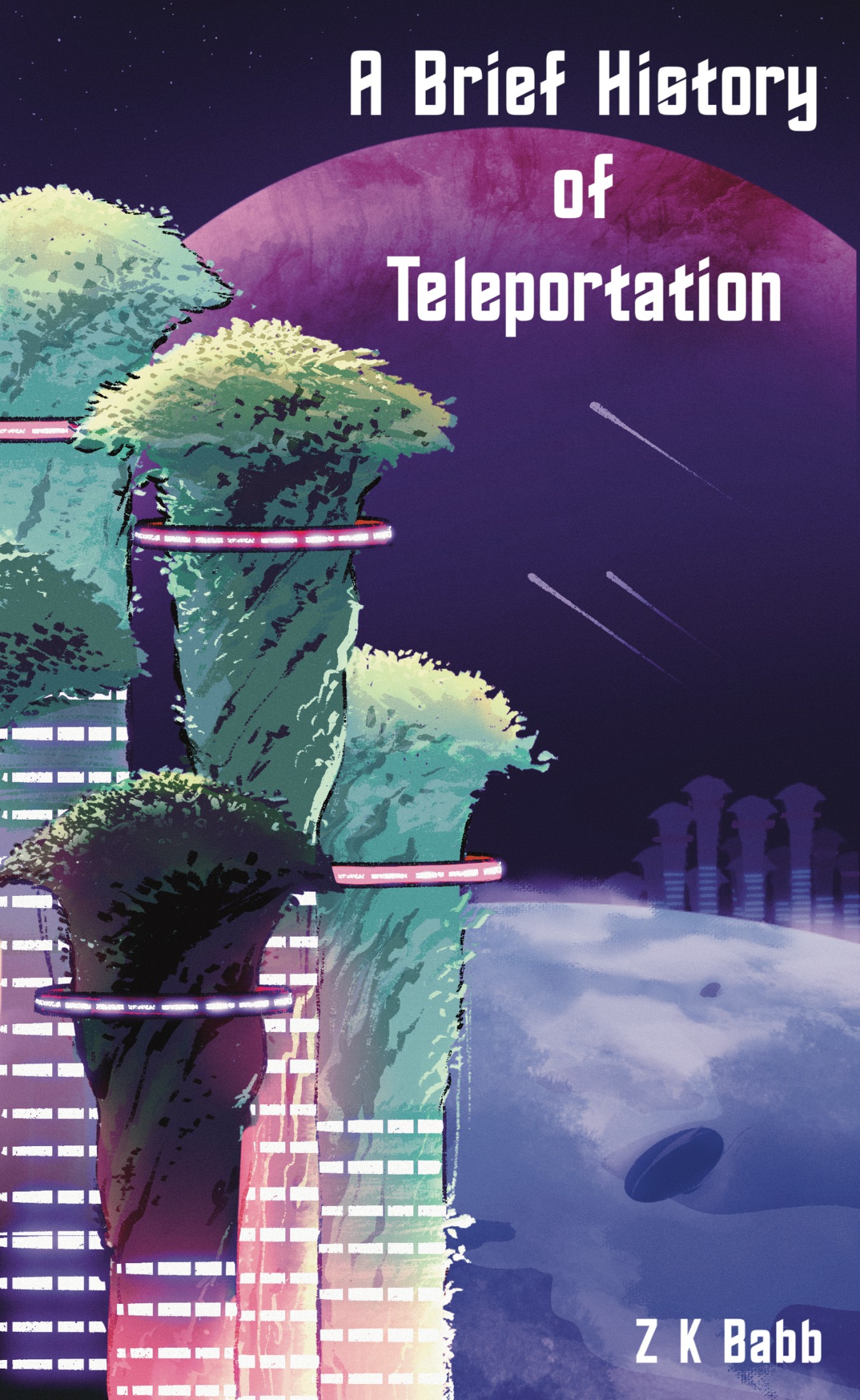
A work of narrative non-fiction set around 2250, tracing how humanity went from terrestrially-focused to understanding its place amongst the stars. Entertainment as a vehicle for ideas too large to fit in a white paper.
The Prerequisites and the Party
Before we can join The Advancement, there are things we have to do. Live on another planet. End all wars. Become a Type 1 civilization. Figure out longevity. These are not small asks.
But the Advancement has been at this for billions of years. They know that the way you build the species that can do those things is by first building the species that wants to stick around long enough to try. A civilization that keeps finding reasons to exist, through its art, its music, its stories, its festivals, its games, is a civilization that keeps working on the hard problems.
When I first found myself thinking about all this, the thought was that even aliens want to know what's going to happen on Game of Thrones. We kind of screwed the pooch on that one, so we owe them one. That's Entertainment. It's how we remember why we're bothering.